What is Gorilla Haven?

Gorilla Haven (GH) provides a safe “haven” and/or temporary holding facility for zoo gorillas in need. In addition, the GH property can be used for educational camps or programs in conjunction with schools or universities. Construction of the Gorilla Haven facility is more than half complete. Phase 0 consists of Silverback Villa and support bulidings enabled us to bring in our first gorilla resident in early 2003. Oliver arrived at Gorilla Haven in 2006.

Other Dewar Wildlife Trust Supported Projects (besides Gorilla Haven)

In addition to Gorilla Haven, the Dewar Wildlife Trust also supports several organizations and projects around the world.

What is the Goal of Gorilla Haven?

The goal of GH is to have NO GORILLAS, since this would mean they would all be on display in zoos in healthy breeding or social groups. Since there are only a limited number of gorillas in captivity, this goal may well be achievable in 20 to 30 years or so. If  there is no longer a need for the GH facility in the future, the 324 acre property will remain a wildlife sanctuary for indigenous wildlife.

What is the Gorilla Haven Mission Statement?

To help make every captive gorilla's life as enriched and natural as possible through husbandry and research and to promote education about gorilla conservation in zoos and the wild.

What type of gorillas will be at Gorilla Haven?

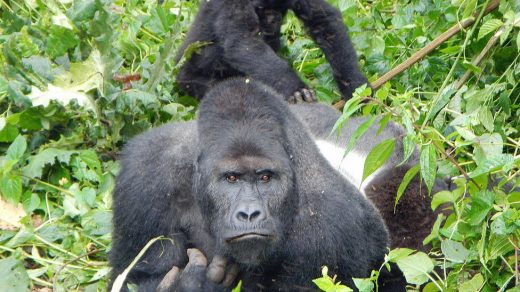
Zoos and the Gorilla SSP (Species Survival Plan) work together to ensure the survival, welfare, and genetic diversity of the captive gorilla population, which is primarily the Western Lowland subspecies (gorilla gorilla gorilla).

Zoos and the SSP strive to place each gorilla into a stable family or social group, but this is not always possible. GH will provide a complementary facility where individual attention can be directed toward those gorillas that cannot be placed in a zoo setting. This will enable zoos to concentrate on breeding and displaying gorillas, and emphasize education about the species and its conservation.

Why would a gorilla not fit into a zoo’s plans?

With about 600 gorillas in captivity and no gorillas legally being exported from their native habitat in Africa since the mid 1970’s, zoos and the SSP are faced with the challenge of ensuring genetic diversity for the long-term future of the zoo population. Management of these animals can create challenges, including:

Surplus males: Zoos generally house gorilla groups with one adult male, the silverback, who leads the family group and controls breeding, as in the wild. When he comes of age, a young blackback often must leave his natal group to avoid in-breeding with siblings and conflict with the dominant male. Some zoos house two silverbacks together, but this is rare, due to space limitations. Since the early 1980’s there has been a increase in male gorilla births at some zoos, creating “excess” males. Bachelor groups are being established at certain zoos to address this problem.

Genetic redundancy: Successful breeding of zoo gorillas was not achieved until 1956 (Colo, in Columbus, Ohio). To ensure the long-term future of the gene pool of zoo gorillas, the SSP was created to monitor and make recommendations on who to breed to ensure a viable genetic future. Some gorillas are too closely related or over-represented in the captive population and thus genetically redundant.

Individual personality/history: Like humans, gorillas have unique needs and personalities and sometimes do not respond well in a specific zoo setting (feces-throwing, aggression, etc.). These individuals can be labeled “problem” animals insofar as they cannot fit into a zoo’s plans for a display group. Often gorillas are sent to several different zoos in an effort to find them places in the captive gorilla world, but this is not always successful.

Issues of age, health, and gender (excess male, primarily): Some gorillas are not able to be housed with other animals due to their own preferences and needs.

Zoo facilities renovation: During the construction of new facilities, zoos often have no choice but to keep gorillas off-display for a significant amount of time, or to break up working family groups, since moving them together is not possible in many cases. GH seeks to help those zoo gorillas who are often not on public display for this and other reasons.

What is the difference between Gorilla Haven and a zoo?

GH will not be open to the public, thus 100% of the effort and resources will be directed towards the needs of each individual gorilla at the facility. Educational visits, by appointment, will be encouraged. Although breeding of gorillas will not be a goal, as social animals, they will be housed together as much as possible.

Who will own and have the final say about the gorillas?

Each zoo will continue to “own” any gorilla housed at GH and retain ultimate control of the gorilla’s future. Housing and care of the gorillas will be the responsibility of GH, with each zoo’s guidance and cooperation.

Where is Gorilla Haven located?

GH is on 324 acres in the North Georgia (Blue Ridge) mountains, with potential facilities for gorillas and keepers in a private, secluded and temperate climate. GH is less than a two hour drive from Zoo Atlanta and the Knoxville Zoo, and an hour+ from Chattanooga, Tennessee.

What facilities are available at Gorilla Haven?

GH has access off a paved, county-maintained road, of which it owns over a mile of frontage. A large valley and fenced-in pastures are surrounded and protected by high mountain ridges including Paris Mountain to its ridge line at 2,300 feet. Several clear mountain streams have their source on the property, which also has a small spring-fed lake, and natural ravines and forested areas which lend themselves ideally to providing large natural habitats for gorillas. There are also homes and administration buildings, barns, etc. Click here for more information on the construction of the gorilla facilities.

How will Gorilla Haven be staffed?

A Board of Advisors for GH has been established, including a variety of individuals with professional and academic backgrounds.

One of the world's most experienced gorilla keeping professionals, Peter Halliday, is our Project Manager, who is in charge of staffing and volunteers. Keepers will be given the opportunity to provide excellent care for the gorillas first and foremost, without the public concerns of a typical zoo. In addition to Pete, we have Kelly Maneyapanda, former lead keeper of gorillas at the Buffalo, NY zoo.

Dr. Rita McManamon, one of the world's most experienced and knowledgeable veterinarians specializing in great apes will liaise with Dr. Frances Cipullo, the GH veterinarian who, with his staff, is on call 24 hours a day.

What is life like for gorillas at Gorilla Haven?

Enrichment is a primary goal, according to each individual gorilla’s specific personality and requirements. We believe that deep bedding, browse, climbing structures and a variety of hiding, resting, and play areas are all essential elements for an enriched life in captivity. When and as possible, gorillas will be housed in groups – bachelor groups, if necessary. If a gorilla must be housed alone, enrichment will be intensified based on the individual’s needs and interests. Gorillas are given the choice to be in- or outdoors 24 hours a day, in protected, secure, and appropriate habitats.

What is the story behind the formation of Gorilla Haven?

During their travels to Europe and North America, the Dewars met and made friends with gorilla keepers and zoo staff, who spoke candidly about their concerns for the small population of gorillas that do not seem to fit into zoos' long-term plans. The Dewars decided to commit themselves personally and financially to helping these animals. If only one gorilla is helped, GH will have served its purpose. If/when there are no gorillas at GH because all gorillas are housed appropriately and in the best way possible, an important goal of GH will also have been reached. Also, the Dewars hope their own efforts can and will inspire others to follow their own dreams - helping wildlife, children, art, whatever.

How is Gorilla Haven financed?

GH is funded by the Dewar Wildlife Trust Inc., which Steuart and Jane established to fund various wildlife conservation efforts including Gorilla Haven. There should be no competition for zoo or conservation revenues. The Dewars’ goal is to be an adjunct or ally to the zoo world. As a 501(c)(3), non-profit charity, the DWT can and does accept donations from individuals, forwarding 100% to help gorillas.

Who are the Dewars?

C. E. Steuart Dewar was born in London, England and came to the USA with his parents as a young student. He studied ethology, biochemistry and music at the University of Chicago as an undergraduate and graduate student. He founded Dewar Information Systems Corporation (DISC) in 1975 and as CEO sold it 20 years later to help finance Gorilla Haven. Considered a top computer expert and one of four founding fathers of the electronic publishing industry, Steuart’s professional and financial acumen is now directed towards the business side of GH for which he is the Chairman and CEO. His new company, which began as a fun hobby and is now more successful than DISC ever was, is Pimlico Software, which sells shareware software for PalmOS handheld computers. Steuart wrote the Advanced Datebook+ application for the Handspring Visor and TREO Communicators. Once again, Steuart is at the leading edge of computer technology and his success means the further success for GH!

Jane T. R. Dewar’s degree in linguistics from Lawrence University led indirectly to an interest in the gorilla Koko’s communication talents. During the mid 1980’s Jane studied zoo gorillas intensely and by 1995 she had “met” almost 400 individual zoo gorillas in Europe and North America. Jane’s profound passion and affection for gorillas seems to be reciprocated. In a 1989 conversation with Koko, Jane signed “I love gorillas”, and Koko signed back “Love gorillas YOU!”. Jane is the President and Founder of Gorilla Haven.